Travelling around Colombia might feel a bit overwhelming at first. The country’s huge, and the transport options can seem all over the place. But once you get the hang of it, it’s actually pretty easy. Keep reading to find out how.
Getting Around: What’s the Best Way to Travel in Colombia?
Moving around Colombia is part of the adventure. You’ll find a mix of city buses, long-distance coaches, local transport, as well as domestic flights that reflect the country’s diverse landscapes.
Whether you’re exploring big cities or heading into the countryside, Colombia has plenty of reliable ways to get you where you want to go.
Here’s a quick rundown of the top ways to get around Colombia:
| Mode of Transport | Ideal For |
|---|---|
| Coach Buses | Intercity travel |
| City Bus Systems (BRT) | Major cities |
| Taxis | Cities and towns |
| Ride-Hailing Apps | Major cities |
| Colectivos | Small towns, Caribbean coast |
Each transport option has its own pros, cons, and unique features — like speed, comfort, and price. To help you decide what works best for your trip, we’ll take a closer look at each one, starting with buses.
1. Travelling in Colombia by Bus
Buses are the main way to travel around Colombia. From the Caribbean coast, exploring the Coffee Region, or hopping between the big cities, there’s always a bus ready to take you there.
You’ll find two main types: coach buses for intercity travel and public buses, including the Bus Rapid Transit (BRT) systems, for city travel.
Coach buses: Long-distance intercity
Coach buses in Colombia are a popular mode of transportation for travelling between cities, particularly for longer distances. They’re usually cheaper than flying and offer different levels of comfort, from basic seats to premium services with extra perks.
We cover the top bus companies in Colombia in more detail in the section below.
Expreso Bolivariano
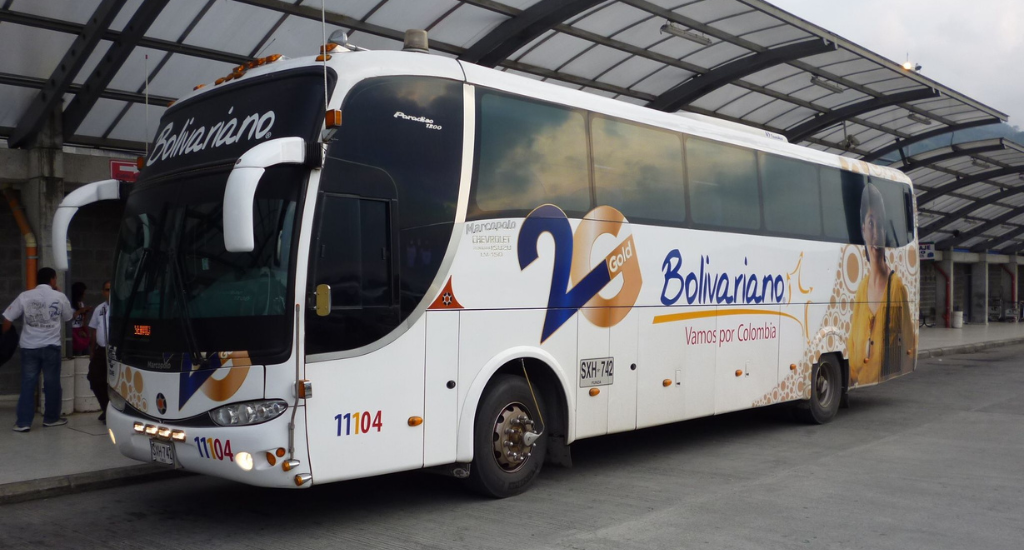
Expreso Bolivariano started in 1956 in Fusagasugá. It began with a small fleet on local routes and has grown to connect major cities like Bogotá, Medellín, Cali, Armenia, and Pereira.
The company runs modern buses, mainly Marcopolo and Busscar models, equipped with the latest technology to ensure a safe and comfortable journey.
Where they go: Bogotá, Medellín, Cali, Armenia, Pereira
Website: bolivariano.com.co
Expreso Brasilia
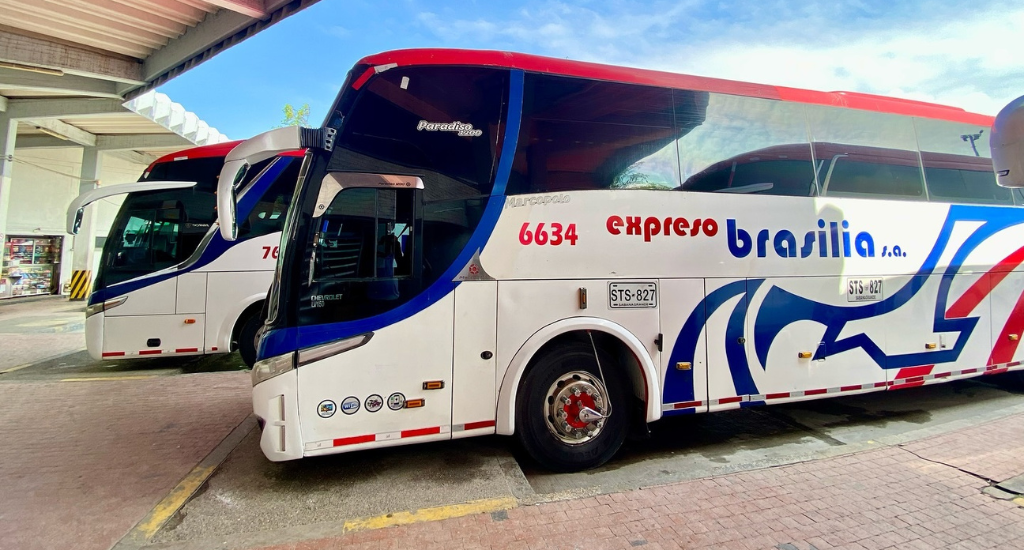
Expreso Brasilia is one of Colombia’s biggest and best-known bus companies. It kicked off in 1961 in Barranquilla, serving the Caribbean coast. These days, it connects over 1,000 destinations across the country — including Bogotá, Medellín, Cali, and the Coffee Region.
With a fleet of around 450 buses, Expreso Brasilia offers regular passenger services, cargo, corporate transport, and rentals.
Where they go: Bogotá, Santa Marta, Medellín, Cartagena, Barranquilla
Website: expresobrasilia.com
Rápido Ochoa
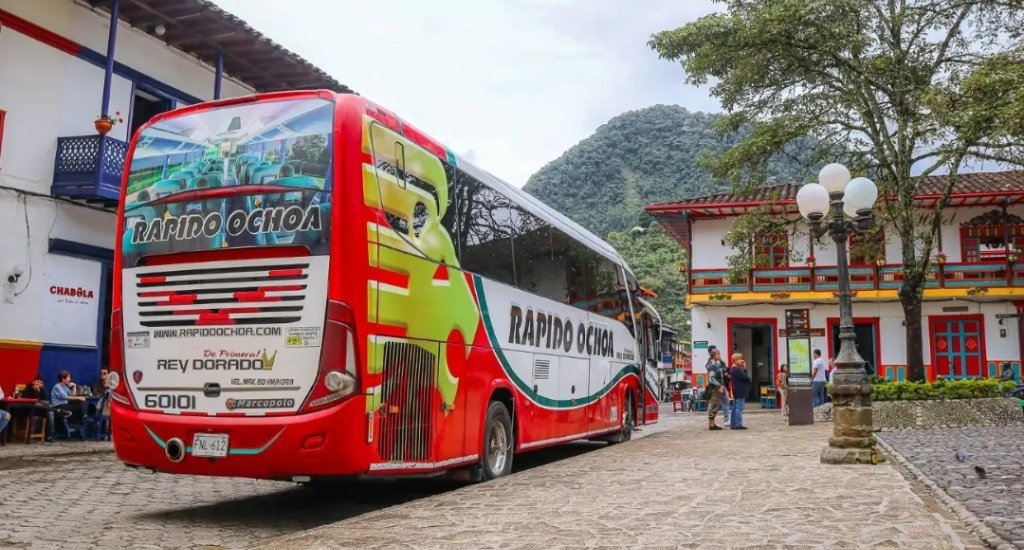
Rápido Ochoa has been on the road for over 60 years. Founded in Medellín back in 1958, it started with routes to Barranquilla and later expanded across major regions like the Atlantic Coast, Antioquia, Chocó, and the busy Bogotá–Medellín corridor.
Where they go: Medellín, Cartagena, Santa Marta, North Coast
Website: rapidoochoa.com.co
Copetran
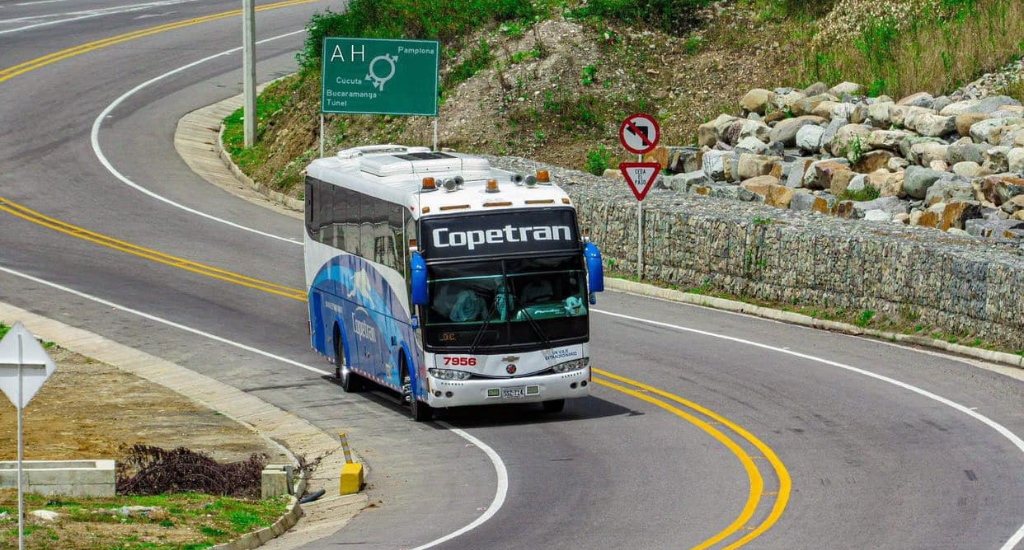
Copetran has been around since 1942, growing from a small cargo and passenger outfit into one of Colombia’s top transport companies. These days, it offers intercity bus routes, tourist services, express courier deliveries, and special transport options.
Where they go: Bucaramanga, Cartagena, Barranquilla, Northern Colombia
Website: copetran.com
Berlinas del Fonce
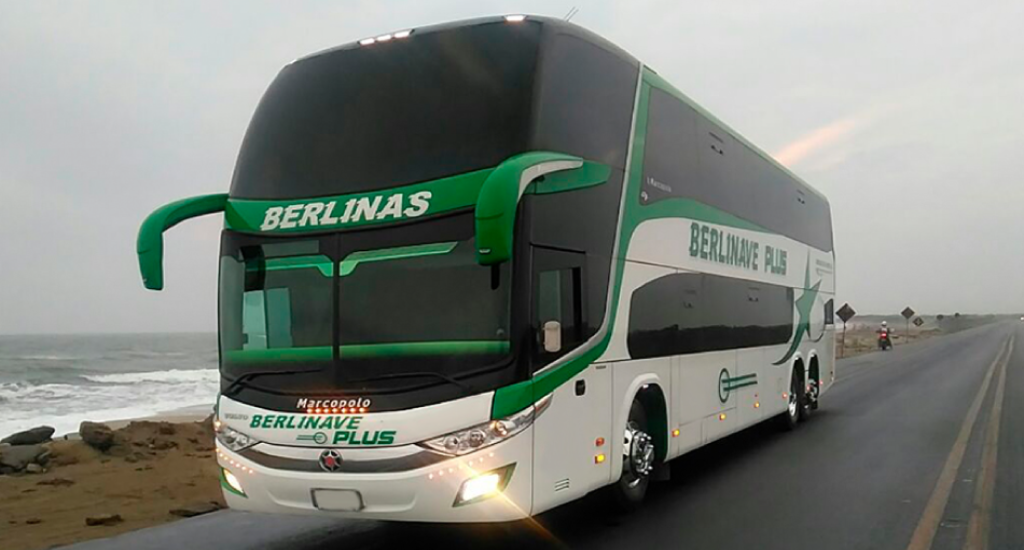
Berlinas del Fonce launched in 1954 in San Gil, Santander, and quickly earned a name for safety and dependable service. Over the years, the company has kept up with new technology while staying focused on friendly customer care.
Berlinas runs intercity buses and offers tourism services, rentals, city tours, and cargo transport to destinations like Santa Marta, Barranquilla, and Cartagena.
Where they go: Bogotá, Bucaramanga, Santa Marta, Barranquilla
Website: berlinasdelfonce.com
Flota Occidental
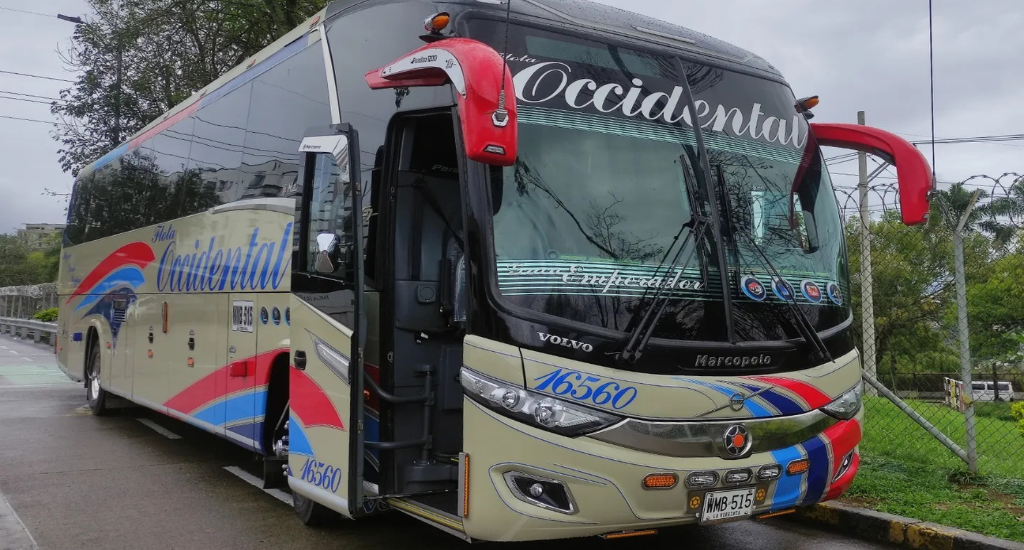
Flota Occidental began in 1955 in Quinchía, originally running colourful chiva buses around Risaralda and Caldas. It didn’t take long to grow, expanding into Chocó, Quindío, Antioquia, Valle del Cauca, and beyond. Now based in Pereira, the company offers long-distance travel, tourism services, and cargo transport.
Where they go: Medellín, Pereira, Manizales, Armenia (Coffee Region)
Website: flotaoccidental.com
Coomotor
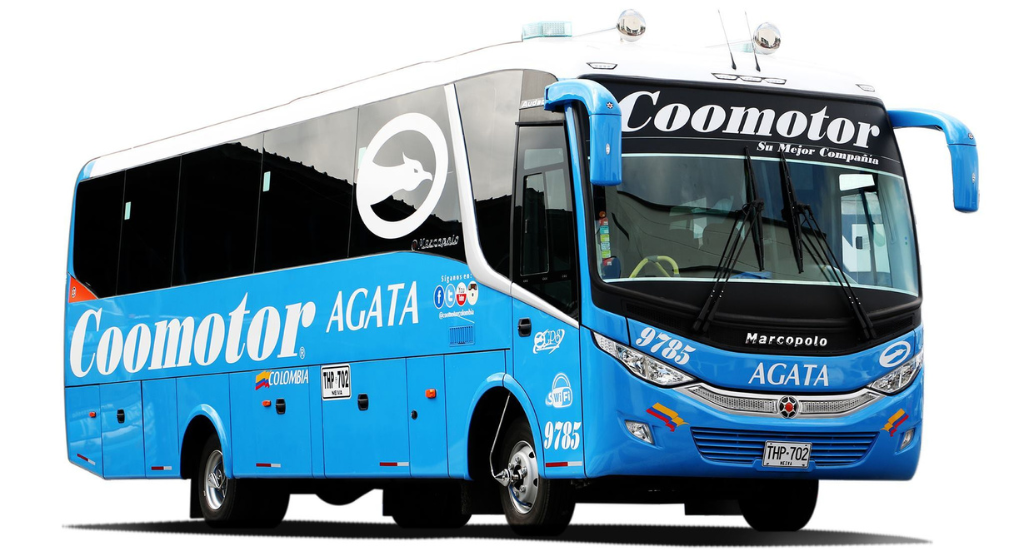
Coomotor plays a big role in southern and central Colombia’s transport network. With strong connections to cities like Neiva, Bogotá, Cali, Armenia, Pereira, and Melgar, it’s especially popular for intercity travel around Neiva and nearby regions.
Where they go: Neiva, Pitalito, Bogotá, Southern Colombia
Website: coomotor.com.co
Expreso Palmira
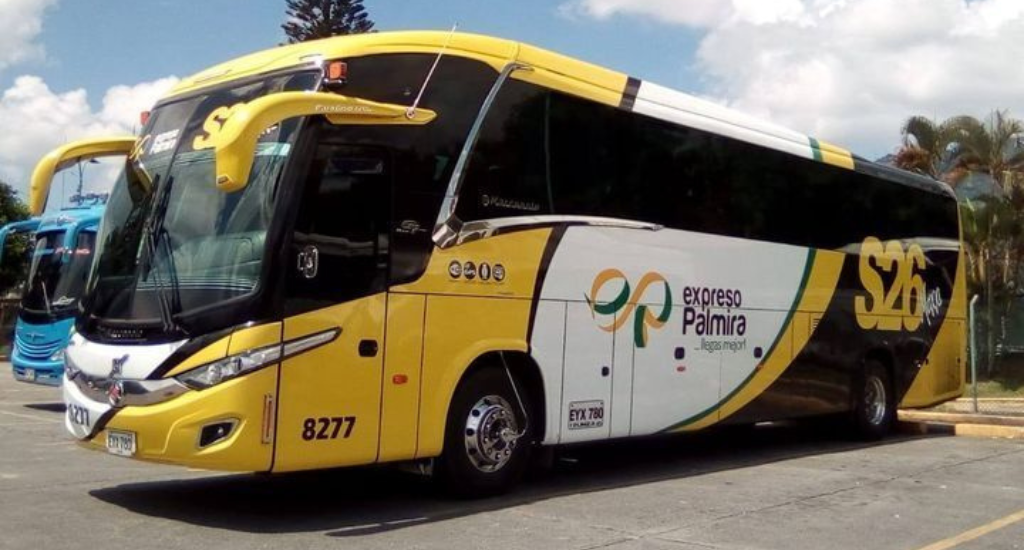
Expreso Palmira has been a familiar name in southwest and central Colombia since 1956. While it focuses on passenger transport, it also runs a full logistics service — moving cargo, parcels, and even messaging by land, river, sea, and air. That makes it a go-to company for both travel and deliveries in the region.
Where they go: Cali, Palmira, Buga, Valle del Cauca
Website: expresopalmira.com.co
Top bus companies in Colombia — And what travellers really think
Here’s a quick look at the the main routes covered, types of services offered, plus what travellers have to say about the top bus companies in Colombia.
| Bus company | Bus types | Reviews |
|---|---|---|
| Expreso Bolivariano | DuoBus 2G+ 2G+ Internacional 2G TecnoVans EuroVans Ejecutivo | Clean, comfortable buses with friendly staff and smooth rides. Often praised for punctual departures, though Wi-Fi and air-con can be unreliable depending on the bus or route. |
| Expreso Brasilia | Premium Plus Premium Plus Extra Preferencial de Lujo Unitransco Servicio Especial | Comfy seats, punctual trips, and a wide route network. Clean buses with decent onboard perks, though Wi-Fi and customer service get mixed reviews. |
| Rápido Ochoa | Rey Dorado (Lo Máximo, Por lo Alto, De Primera) Class Plus Lo Nuestro | Smooth, reliable rides with helpful staff and decent onboard comfort. Travellers like the punctuality, but some reviews mention delays, Wi-Fi glitches, and comfort differences between buses. |
| Copetran | Doble Piso Preferencial de Lujo Busetón Sprinter Preferencial Más Doble Piso Más | On-time trips, comfy seats, and friendly service. Air-con and reclining seats are a bonus, but Wi-Fi and service can vary by route. |
| Berlinas del Fonce | Berlinave Plus Berlinave Super Confort | Clean, punctual buses with friendly staff and smooth journeys. Most travellers are happy, but some mention tight legroom, Wi-Fi issues, or occasional delays. |
| Flota Occidental | Gran Emperador Élite Gran Emperador Línea Platino Línea Príncipe Star Línea Príncipe Estándar Línea de Lujo Línea Monarca | Punctual trips, helpful staff, and clean, comfy buses. Rides are generally smooth, though some note delays, limited legroom, or Wi-Fi problems on older coaches. |
| Coomotor | Econociva Superciva Excluciva Camioneta Superciva Semicama | Clean buses, smooth journeys, and good comfort, especially on long routes. Punctuality is a strong point, but Wi-Fi and seat quality can differ between bus types. |
| Expreso Palmira | S26 Dupplo Mettro | Well-kept buses with friendly staff and smooth, on-time departures. Comfort is solid overall, though some older buses can feel cramped or have spotty air-con and Wi-Fi. |
How to book bus tickets in Colombia
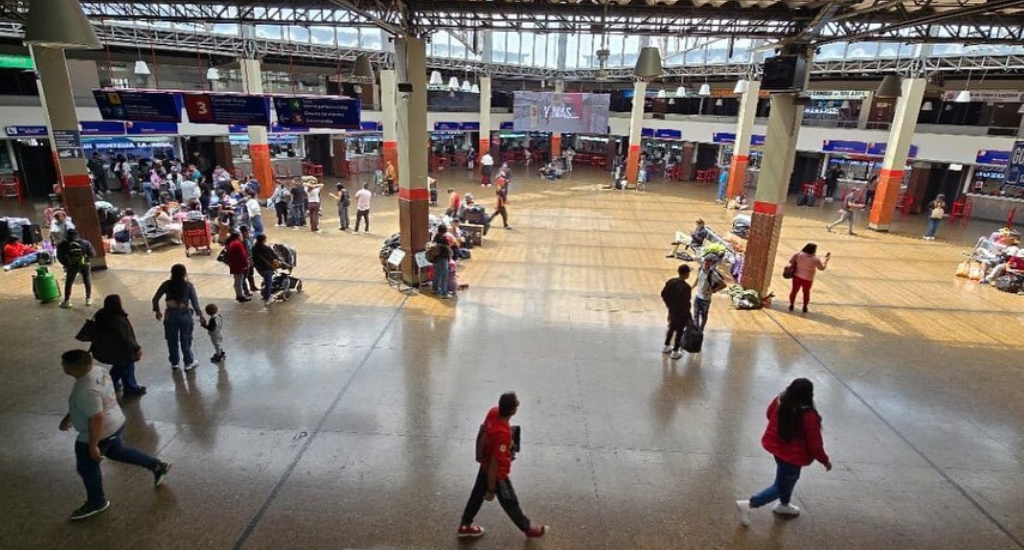
Online booking platforms. If you want to compare routes, prices, and companies in one go, check out some trusted online platforms like Bookaway, redBus.co, and Busbud. They're easy to use, let you pay with international cards, and you’ll usually get instant confirmation.
Watch for extra fees, some sites may add a small service fee at checkout.
Company website. Big names in bus travel industry have their websites where you can check bus schedules, prices, and book your ticket directly. Most sites accept credit cards or Colombian payment methods like PSE (Pagos Seguros en Línea), a local online payment system linked to a bank.
At the terminal. You can head straight to the bus station and buy your ticket on the spot. It’s perfect for last-minute plans or if you want to check out prices at different company counters. This works best if you’re travelling during the low season. But otherwise, be ready for queues, especially during holidays.
Company ticket office. Some bus companies have ticket offices in city centres, shopping malls, or even small towns, not just at the terminals. It’s a handy way to book in advance, often pay in cash, and sometimes get insider tips on schedules or promotions.
Best tips for buying bus tickets
Booking bus tickets in Colombia is pretty straightforward, but a few tips can save you hassle (and money):
- Book in advance. Seats fill up quickly around holidays, long weekends, and Christmas; don’t wait until the last minute!
- Check your payment options. Local sites often use PSE (for Colombian bank accounts), but some booking platforms usually accept international cards. You can also pay cash at the terminal.
- Check if you need to print your ticket. Depending on the bus company and booking platform, you might need to print your ticket or exchange your voucher at the terminal. But some providers let you board directly with an e-ticket. Double-check the confirmation message you got after booking!
- Arrive early at the terminal. Even with an online booking, it's best to get there 30 minutes to 1 hour before departure so you’ve got time to find your gate and sort everything out.
2. Public Transport
Colombia’s public transport has come a long way, especially in its biggest cities. From efficient Bus Rapid Transit (BRT) systems to Medellín’s metro network — the only one in the country — getting around has become easier, faster, and more affordable for both locals and travellers.
BRT/Public City Buses
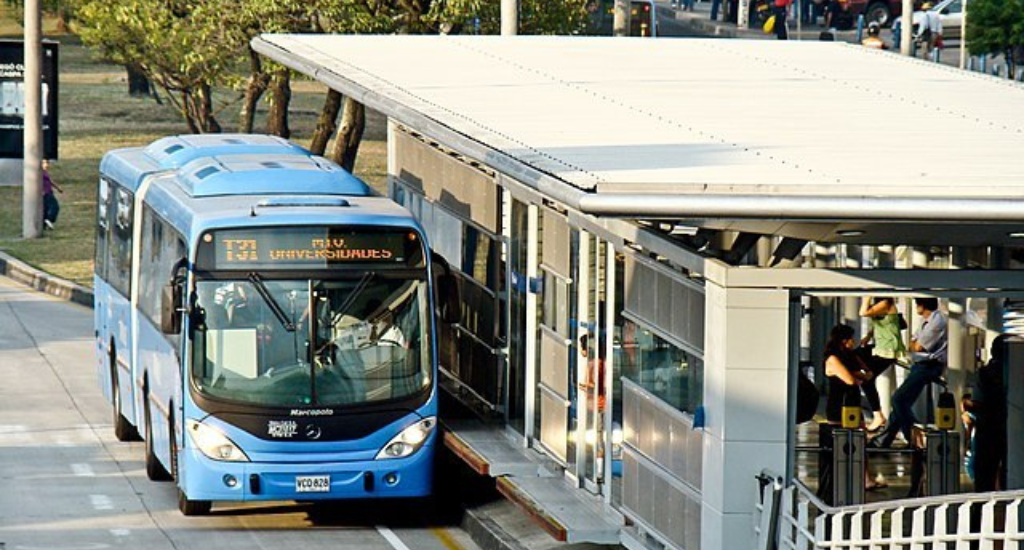
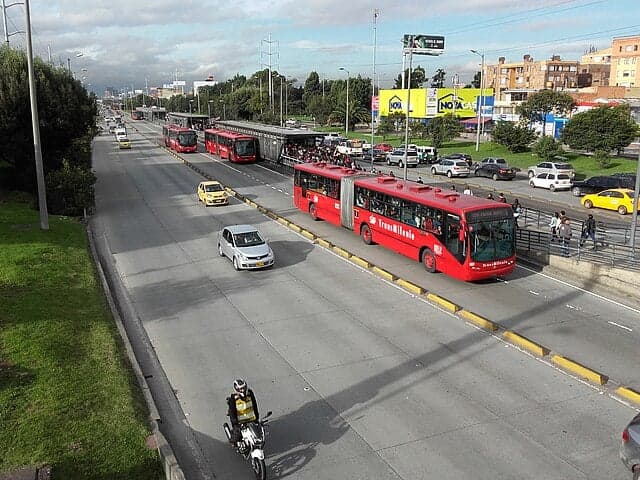
In 2002, Colombia introduced Bus Rapid Transit (BRT) systems to ease traffic and improve public transport in cities with over 500,000 people. Unlike long-distance coach buses, BRTs operate within cities on dedicated lanes, with fixed routes and frequent stops, making daily commute faster and more reliable.
These systems are run by city authorities or private operators under government contracts. In smaller cities, Strategic Transportation Systems were launched to modernise local transit. Together, they’ve reshaped how Colombians move around urban areas.
What you should know about BRT transport
| City | BRT System | Fare | Routes Covered / When to Use |
|---|---|---|---|
| Bogotá | TransMilenio | 3200 COP ($0.87) | Runs along the main corridors of Bogotá, connecting north-south and east-west routes — best for moving quickly around the city, especially during rush hours. |
| Pereira | Megabús | 3250 COP ($0.89) | Covers Pereira, Dosquebradas, and the Cuba sector — ideal for cross-city trips and reaching the city centre. |
| Cali | MIO (Masivo Integrado de Occidente) | 2200 COP ($0.60) | Connects key neighbourhoods with downtown Cali — great for daily commutes and visiting main attractions. |
| Barranquilla | Transmetro | 3300 COP ($0.90) | Covers major areas between Barranquilla and Soledad — great for daily travel and reaching key neighbourhoods and business districts. |
| Cartagena | Transcaribe | 3400 COP ($0.93) | Serves the historic centre, Bocagrande, and surrounding suburbs — useful for tourists visiting top sights and locals commuting. |
| Bucaramanga | Metrolínea | 2400 COP ($0.66) | Links Bucaramanga with Floridablanca, Girón, and Piedecuesta — convenient for getting around the metropolitan area. |
| Medellín | Metroplús (includes Metro fare) | 3430 COP ($0.94) | Connects with Medellín’s Metro lines, mainly in the south and downtown areas — perfect for seamless connections across the city. |
How to pay for BRT in Colombia
To ride Colombia’s Bus Rapid Transit (BRT) systems, you’ll need a transit card, which you can buy and reload at stations or convenience stores. These cards are the only way to pay on the buses — cash isn’t accepted onboard.
Some cities have loading stations around town where you can top up your card. In a few cases, you might find options for buying a single-use ticket with cash at the station, but using the card is usually the easiest and fastest way to pay.
Metro (only available in Medellin)
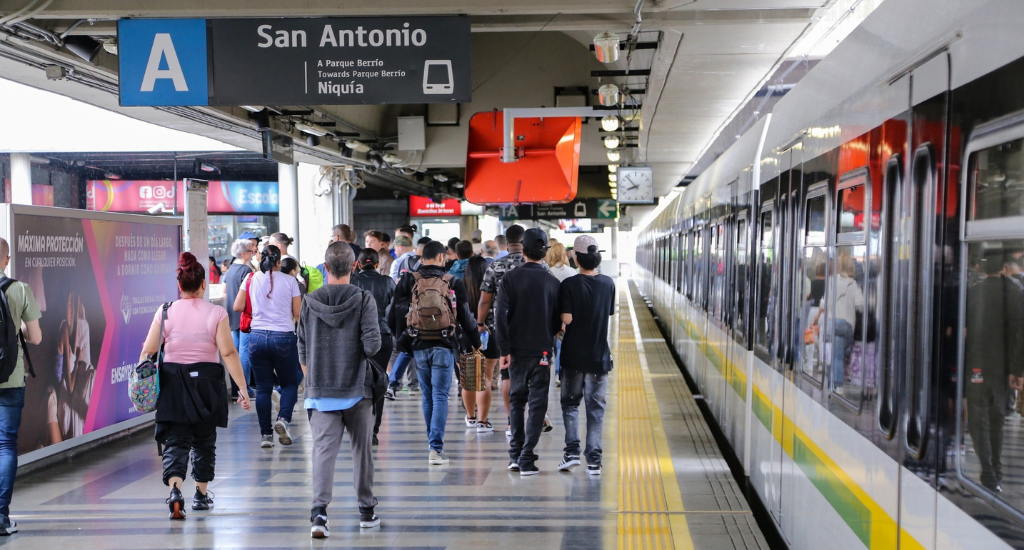
The Metro is the heart of Medellin's public transport, and the only metro system in Colombia. It’s fast, clean, and incredibly efficient, making it a favourite for both locals and travellers. If you want to skip the traffic and get a local experience, this is the way to go.
What you’ll find in the Metro network
The Medellín Metro isn't just trains, it's a full transport system that includes:
Metro Lines (A & B)
- Line A: Runs north to south (Niquía to La Estrella), connecting downtown with the suburbs.
- Line B: Runs west from the centre (San Antonio to San Javier).
Cable Cars (K, J, L, H, P)
Reach up into the hills with amazing city views. Great for Parque Arví and Comuna 13.
Tram (Line M)
Light rail linking the city to eastern neighbourhoods.
Metroplús (Line T-A)
Bus rapid transit that connects with other metro lines.
Each one connects different parts of the city, including hillside neighbourhoods and tourist spots.
Operating hours for the Metro
| Day | Opening Time | Closing Time |
|---|---|---|
| Monday–Saturday | 4:30 AM | 11:00 PM |
| Sundays & Holidays | 5:00 AM | 10:00 PM |
Exact hours may vary slightly by line and station.
Medellin Metro fare guide
If you're planning to use the Medellín Metro, you should get a Cívica card, the official rechargeable card for the metro system. It makes travelling around the city cheaper, quicker, and way easier.
You’ll skip the queues for paper tickets and get a discounted fare every time you ride. The Cívica card works across the entire Metro network.
Types of Civica cards
There are a few different Cívica cards depending on your needs. Here’s a quick comparison to help you choose the right one:
| Card Type | Who It’s For | Cost | Benefits | Fare |
|---|---|---|---|---|
| Cívica Personalizada (Personalized Card) | Locals and tourists with ID | Free | Discounted fares across the Metro system | 3,430 COP ($0.94) |
| Cívica Al Portador (Bearer Card) | Occasional riders (no registration required) | 10,900 COP ($3) | Rechargeable, but fewer discounts | 3,900 COP ($1) |
| Cívica Especial | Seniors, students, and people with disabilities | Free (with approval) | Up to 50% off fares with eligibility | 1,420 COP ($0.39) - 3,060 COP ($0.84) |
| Arví Card | Visitors to Parque Arví via Metrocable Line L | 10,000 COP ($3) | Unlimited round-trip rides on Line L for one day | 13,700 COP ($4) |
For tourists, the Personalised Cívica is the most recommended option. Just bring your passport or ID to any metro service point and get one for free in minutes.
3. Taxis and Ride-Hailing Apps
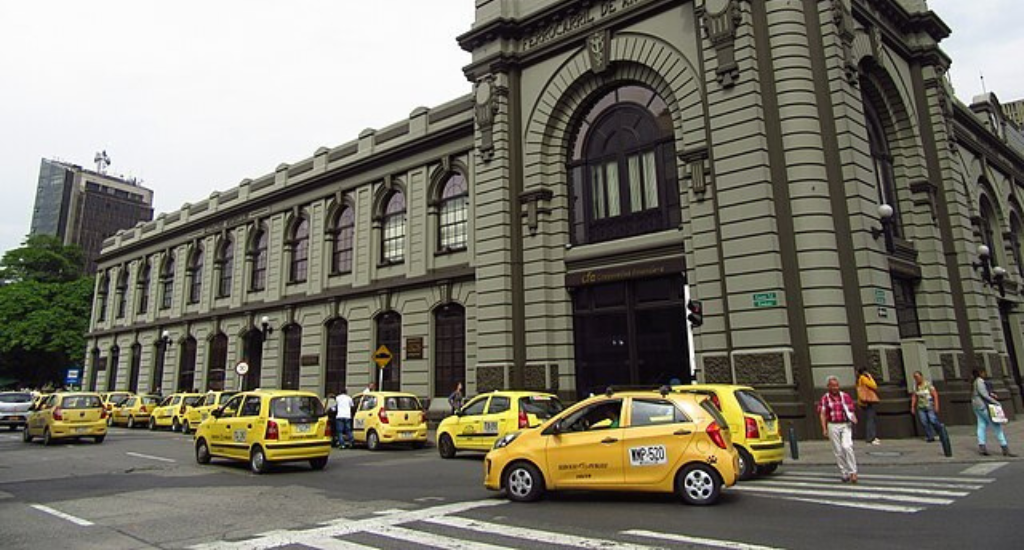
Getting around Colombia by taxi or ride-hailing app is fairly straightforward. In major cities like Bogotá, Medellín, and Cartagena, both options are widely available and easy to use.
Taxis are regulated, metered (in most cities), and easy to spot, but they come with some risks if you’re not careful.
Ride-hailing apps like Uber and DiDi are often the safer choice, especially for foreign travellers. For most city rides, expect to pay between 9,000 COP ($2) and 25,000 COP ($7).
Taxis
Regular yellow taxis are common in almost every Colombian city and town. In places like Bogotá and Medellín, taxis are required to use a meter, but not all drivers comply. In many other areas, especially on the coast or in smaller towns, meters aren’t used at all. Instead, you’ll need to agree on a fare before the ride starts.
Even with an agreed price, some drivers may try to change it at the end of the trip — a common issue, especially for foreign tourists who aren’t fluent in Spanish.
How to take a taxi:
- Recommended: Book through your hotel or head to an official taxi rank. It’s usually more reliable.
- Not recommended: Hailing on the street. It's a hit or miss. There are honest drivers, but sadly there are also many who will try to rip you off — as some travellers have warned on TripAdvisor.
Payment Tip: Bring small bills. Most taxis are cash-only, and drivers don't always carry change.
Are taxis safe in Colombia?
Taxis are generally safe during the day, but not every driver is trustworthy. Scams do happen, especially in larger cities like Bogotá and Cartagena, and they're more likely to happen at night.
Common issues include overcharging and refusing to use the meter in places where it’s required.
One of the more serious scams is called the “paseo millonario.” It usually starts when someone hails a taxi off the street. This article from The World explains how it works in Colombia. The driver suddenly takes a detour, and a group of accomplices may enter the car. They might blindfold the passenger and use threats to force them to hand over bank details or access to mobile apps. Victims are often dropped off far from the city once the attackers have taken what they want.
The good news is this scam was way more common a decade ago. These days, it’s far less frequent if you use safer taxi options, but robberies can still happen.
Here are some tips to avoid problems:
- Don’t hail taxis on the street — most scams begin this way.
- Use official taxi ranks or book through your hotel so the driver is traceable.
- Keep your windows up and doors locked while in the car.
- Avoid riding alone at night if you can.
If you’d rather skip the risk altogether, ride-hailing apps like Uber or Cabify are often a safer and more reliable option. These apps log every trip and driver, giving you an extra layer of security.
Ride-Hailing Apps
For a safer and more convenient alternative to street taxis, ride-hailing apps are widely used in Colombia’s major cities. These platforms offer upfront pricing, verified driver information, in-app payment options, and ride tracking.
Here’s a list of the most popular ride-hailing apps in Colombia:
Uber
If you’ve heard mixed things about Uber in Colombia, you're not alone. For a while, the service operated in a bit of a legal grey area. Some drivers even asked riders to hop in the front seat, just to keep things low-key.
But here's the good news: in 2023, Colombia’s Supreme Court ruled that Uber isn’t illegal. That decision gave the green light for the company to operate across the country without any legal drama.
So yes, you can use Uber in Colombia — and it’s actually a super convenient option for getting around. It works in Bogotá, Medellín, Cali, Barranquilla, Pereira, Bucaramanga, and Cartagena.
DiDi
DiDi is one of the main ride-hailing apps in Colombia and works just like Uber. It’s available in big cities like Bogotá, Medellín, Cali and Barranquilla.
The app gives you an upfront fare estimate, and you can choose to pay by card or in cash. In many cases, DiDi rides come out a bit cheaper than Uber, especially on short city trips. The app also runs regular promotions, so checking both DiDi and Uber before booking can help you save some pesos.
Cabify
Cabify offers both private cars and licensed taxis in Colombia. In cities like Bogotá and Medellín, you can choose the type of ride directly in the app.
Private rides tend to feel a bit more premium — the cars are usually newer, and drivers are well-rated. Taxis booked through Cabify still go through the app, so you’ll get upfront pricing and tracking either way.
Compared to Uber or DiDi, Cabify can be slightly more expensive, particularly when you're booking a private car. Fewer discounts are floating around, too. But many travellers say the higher cost is worth it for a safer, smoother experience.
One thing to note: Cabify’s coverage is limited. It works best in Bogotá and Medellín.
inDrive
InDrive works a bit differently from other ride-hailing apps in Colombia. Instead of fixed prices, you suggest your fare. Nearby drivers can accept your offer, decline it, or send back a counteroffer.
It’s a more flexible system, and fares often end up cheaper, but you’ll need a rough idea of what local rates are to avoid overpaying or getting ignored.
Most inDrive rides in Colombia are paid in cash. Some drivers might accept bank transfers or digital wallets, but that depends on the individual, and it’s not guaranteed in the app. In general, it’s best to use inDrive when you’re familiar with the area or travelling during the day.
Comparison of taxis and ride-hailing apps in Colombia
| Ride Option | When to Use |
|---|---|
| Street taxis | Easy to find in most cities. Best for short rides when apps aren't available. Use with caution: agree on fare in advance or insist on the meter. |
| Uber | Great all-rounder. Safe, tourist-friendly, with upfront pricing and in-app payment. Works in most major cities. |
| DiDi | Often cheaper than Uber and runs frequent promotions. Good for budget travellers. |
| Cabify | More premium option. Offers both private cars and taxis with well-rated drivers. Best in Bogotá and Medellín. |
| inDrive | You set the fare. Can be cheaper for longer trips, but you’ll need to know local rates. Best for experienced travellers and daytime trips. |
4. Colectivos and Minivans in Colombia
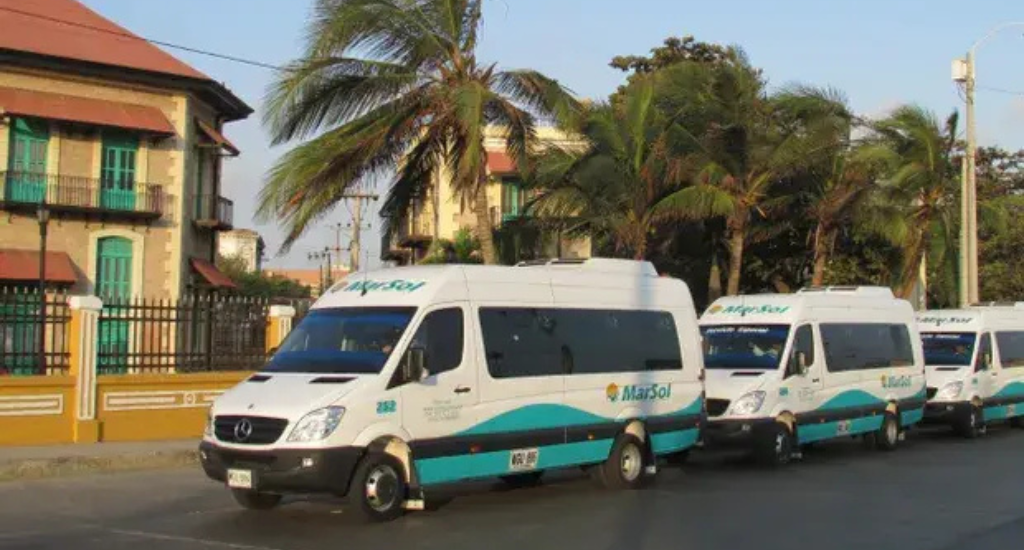
For shorter trips or routes between smaller towns and tourist destinations in Colombia, you’ll likely come across colectivos or minivans. These are both shared transport options, but they work in very different ways.
Colectivos: The local way to get around
Colectivos are shared vans that run between nearby towns. They don’t follow a strict schedule — they leave when full — and usually depart from a central pickup point or local terminal.
You’ll find colectivos in places where public transport is limited or where buses just don’t run. For example, if you’re heading from Santa Marta to Minca, a colectivo with CootrasMinca is the go-to option. It’s cheap, quick, and easy once you know where to catch it.
Colectivos are best for short, local routes. You won’t find them running between major cities or long-distance destinations.
Minivans: A comfortable option on tourist routes
Minivans are more structured than colectivos. They run on fixed schedules, usually include hotel or central pickup, and can be booked online in advance, either through your accommodation or on platforms like Bookaway and 12Go.Asia.
You’ll find minivans on some of Colombia’s most popular tourist routes, where they offer a faster alternative to buses. Minivans are ideal if you want to avoid the hassle of getting to and from busy bus terminals.
Top minivan companies in Colombia
- Destino Colombia – Runs minivans between Medellín and Guatapé with hotel pickup options.
- Gran Colombia Tours – While primarily a tour company, Gran Colombia Tours offers private and shared transport options between Medellín and Guatapé.
- Viajes Imperial – One of the few operators offering shared van transport between Bogotá and Cali, making it a quicker, more convenient alternative to a long-distance bus.
- Marsol Transportes – Runs minivans along the Caribbean coast, connecting Santa Marta, Cartagena, and Barranquilla. They offer multiple daily departures with door-to-door hotel pickup and drop-off,
Minivans vs Buses: Which one should you take?
If you're travelling a longer route like Bogotá to Cali or Santa Marta to Cartagena, you might be choosing between a minivan or a coach bus.
Both are solid options, but here’s how they compare:
| Feature | Minivan | Coach Bus |
|---|---|---|
| Speed | Quicker, fewer stops | Slower, more terminal stops |
| Pickup | Often includes hotel pickup | Terminal only |
| Comfort | Tighter seating, less legroom, limited space for luggage | More legroom and space, varies by company and bus type |
| Booking | Online, through company or via accommodation | Online, at bus terminals, or on travel apps |
| Availability | Limited to popular routes | Available nationwide |
| Best for | Tourist-friendly routes between major cities or attractions | Long-distance travel, overnight rides |
Important Note: Minivans don’t operate on every route. For many destinations, especially more remote ones, the bus is your only option.
5. Domestic Flights
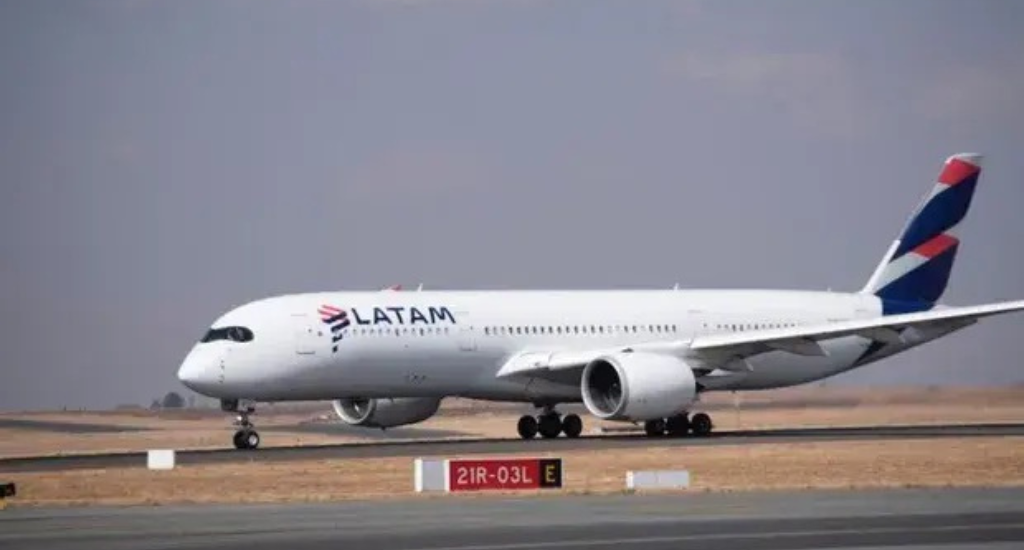
Colombia’s a big country — and when you’re crossing from coast to jungle or mountain to island, flying can save you a lot of time.
Domestic flights are often surprisingly affordable, especially if you book early or travel light. While buses are great for budget travellers or regional routes, flying is usually the smartest choice when you're short on time or travelling long distances.
When to take a flight?
Some trips in Colombia are just better by air. For example, travelling from Bogotá to Cartagena or Medellín to Santa Marta can take 16 to 20 hours by bus, but only 1.5 to 2 hours by plane.
Flying makes the most sense when:
- You want to avoid a long, uncomfortable bus ride
- You’re travelling between far-apart regions like the Amazon, the Pacific coast, or San Andrés Island
- You’ve found a promo fare that's cheaper than expected
- You’re packing light and want to avoid baggage fees on low-cost airlines
Major domestic airlines in Colombia
Here are the main airlines flying domestic routes:
Avianca
The country’s flagship carrier. Offers full-service flights with included cabin bags, free changes on some fares, and a good on-time record.
Website: avianca.com
LATAM Airlines Colombia
Part of LATAM Airlines. Offers solid service and often competitive pricing. Some fares don’t include bags, so it’s worth checking the fare details before booking.
Website: latam.com
SATENA Colombia
Government-run airline flying to remote areas like Leticia (Amazon), Quibdó, and Mitú. Often, the only option for reaching Colombia’s less-connected regions is.
Website: satena.com
Wingo
Colombia’s main low-cost carrier. Based in Bogotá, Wingo flies to major cities and destinations like San Andrés. Cheap base fares, but most extras like baggage or seat selection come with added fees.
Website: wingo.com
IMPORTANT NOTE: Low-cost airlines Ultra Air and Viva Air shut down in 2023, but you’ll still see some outdated listings on booking sites. Always double-check the airline is operating before you book.
Popular domestic routes
| Route | Flight Time | By Bus |
|---|---|---|
| Bogotá to Cartagena | 1h 40m | 22–25 hours |
| Medellín to Santa Marta | 1h 15m | 15–17 hours |
| Bogotá to Leticia (Amazon) | 2 hours | Not accessible by road |
| Medellín to Cali | 1 hour | 10–15 hours |
| Cartagena to San Andrés | 1.5 hours | Only by air |
Flight booking tips in Colombia:
- Book early. Prices rise quickly closer to the date, especially around holidays and weekends.
- Use flight comparison tools like Skyscanner or Google Flights.
- Check what’s included. Low-cost carriers often charge extra for cabin bags and seat selection.
- Travel light if possible. Carry-on-only fares are usually much cheaper.
- Double-check the airport. Cities like Medellín have more than one airport (José María Córdova International Airport and Olaya Herrera Airport), so make sure you go to the right one.
6. Car Rental: Is It Safe?
Yes — renting a car in Colombia is generally safe, as long as you follow a few basic precautions. Stick to well-travelled routes, avoid driving at night, and make sure your documents and insurance are in order. Most roads between major cities are in good condition, and apps like Google Maps and Waze make navigation straightforward.
Where renting a car really makes sense is when you’re exploring Colombia’s countryside and smaller towns. It gives you the freedom to stop whenever you like and reach places that buses don’t always connect well.
Popular road trips
Coffee Region (Eje Cafetero): 4 to 7 days
Usually includes Salento, Filandia, Manizales, Armenia, Pereira, and Jardín. Expect rolling green hills, colourful towns, and coffee farms. Roads are generally in good condition, and distances aren’t too long.
Caribbean Coast: 5 to 10 days
The classic route runs from Cartagena to Barranquilla, Santa Marta, and Tayrona National Park, with the option to continue to Palomino or La Guajira for desert landscapes. Roads are paved but get rougher the further north you go.
Tatacoa Desert: 2 to 3 days
Most travellers start in Neiva and drive to Villavieja before heading into the desert itself. Public transport is limited once you’re there, so a car makes it much easier to explore viewpoints and stay overnight.
Tips for safe car rental in Colombia
- Licence: You can drive with your home licence for up to 90 days, as long as your stay is legal under your visa or tourist permit. An International Driving Permit isn’t mandatory but can be useful if your licence isn’t in English or Spanish.
- Insurance: We recommend adding extra coverage for theft and damage. The mandatory SOAT insurance only covers injuries to people, not damage to the car.
- Choose a reputable company: Stick to trusted local or international rental agencies with solid reviews to avoid hidden fees or poorly maintained cars.
- Check the car before driving off: Walk around and take photos or videos of any scratches, dents, or tyre wear. This helps prevent unfair charges later.
- Keep cash handy: Highways have lots of toll booths. They accept cash or a local electronic pass, but since visitors rarely have one, it’s best to carry cash.
- Avoid night driving: Roads can be poorly lit and unpredictable after dark.
When renting a car might not be worth it
A rental car isn’t always the best choice. You can probably skip it if:
- Your trip is city-based. In Bogotá, Medellín, or Cartagena, traffic is stressful and parking is hard to find. It’s much easier to use ride-hailing apps like Uber, DiDi or Cabify, or hop on Medellín’s metro.
- You’re short on time. For long distances, domestic flights or intercity buses are often quicker and better value than driving.
- You’re on a budget. By the time you add tolls, petrol, parking and insurance, renting can be more expensive than flights, buses or taxis.
Rounding It Up
The best way to travel in Colombia depends on your route, your budget, and how much time you’ve got. Some journeys are easier by bus. For certain routes, flying just makes more sense. In between, colectivos, taxis, and minivans help connect nearby towns and tourist spots.
Once you know what’s available, it’s easier to choose the right option. For long-distance routes or busy travel days, it’s worth booking ahead. Platforms like Bookaway and Skyscanner can help you compare transport options and prices in one place.