12 best things to do in Puerto Viejo
Situated on the Caribbean coast, the small town of Puerto Viejo offers an incredible fusion of culture. You’ll hear locals speaking Creole, and find reggae music flowing from bars. All of this is alongside traditional Costa Rican sodas and fancy international restaurants popular with expats.
You can feel the sense of community in Puerto Viejo, even if you’re just visiting for a few days. Travellers gather on the beach to play volleyball and new connections are made in the bars and the Saturday market that runs every week.
By day, Puerto Viejo de Talamanca is a laid-back beach town boasting chilled Caribbean vibes. By night, the little town comes alive, with its lively bars and beach parties.
Whether you’re looking to pick up some surfing skills or just laze on the beach all day, Puerto Viejo can offer something for every type of traveller.
If you want to do something aside from beach hopping, Puerto Viejo is also full of wildlife and nature. Close by you’ll find flourishing national parks, wildlife centres and rushing rivers for you to explore.
Get your bucket list ready. In this guide, we'll show you the best things to do in Puerto Viejo and how to experience them.
Need help planning your trip? Check out our tips for visiting Puerto Viejo — you'll find the best restaurants, where to stay, how to get around and more!
Top tours in and around Puerto Viejo
- Guided Tour of Cahuita National Park for $40
- Bribri Community Tour for $65
- Full-day White Water Rafting Tour for $103
#1 Spend the day exploring Cahuita National Park
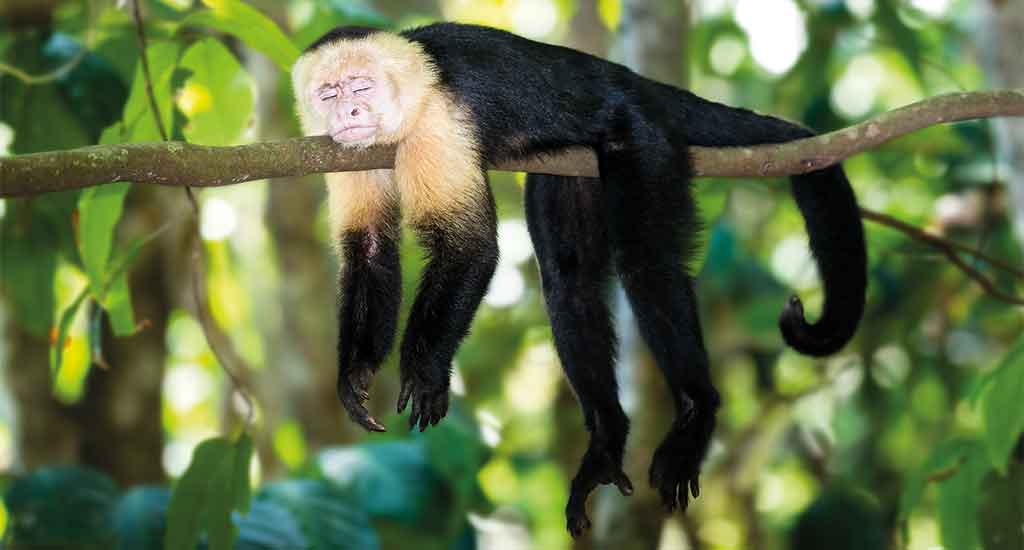
Cahuita National Park is both a land-based and underwater national park.
The national park is only a 20-minute drive from Puerto Viejo and is a great way to spend the day if you want to be surrounded by nature.
The land
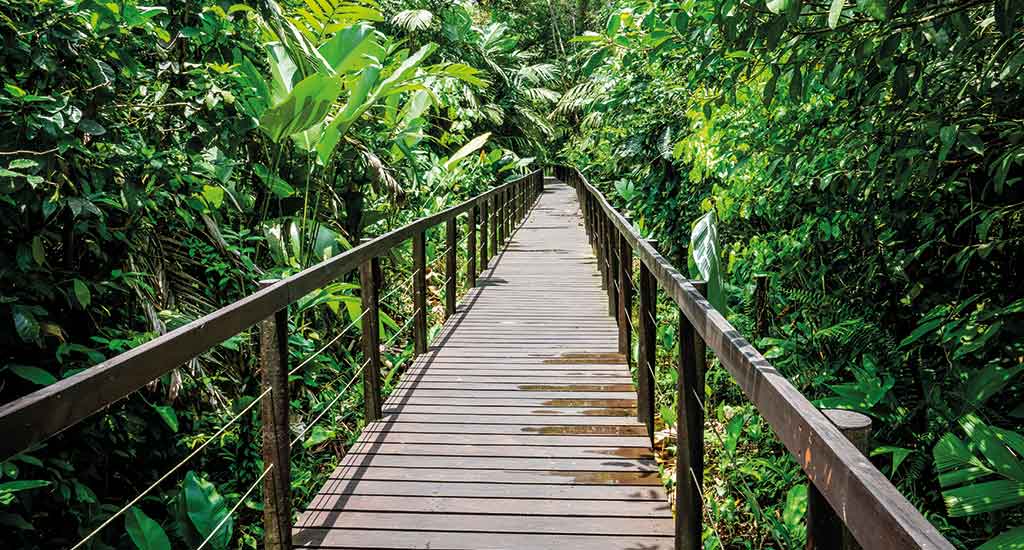
The land area within Cahuita National Park covers 1,100 hectares, boasting dense jungle and flourishing wildlife. Some things to keep your eye out for include sloths, howler monkeys, toucans, and herons, as well as orchids and mushrooms.
We’d recommend hiring a guide for the national park if you really want to learn about what's inside. As well as visiting Cahuita, this tour also takes you to a waterfall where you’ll be able to enjoy a refreshing swim and some snacks. The tour takes around 2 hours and costs $40 per person.
The water
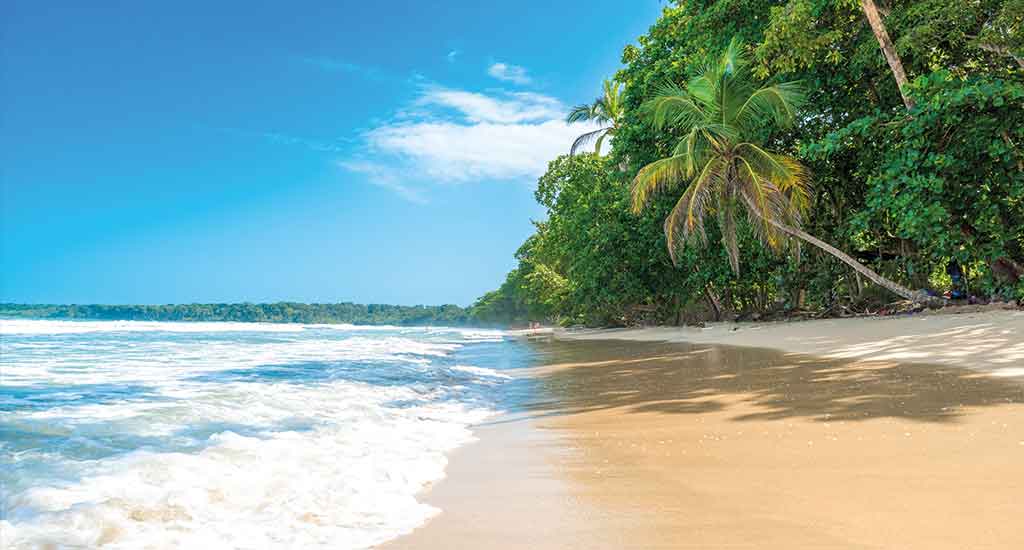
The beach inside Cahuita is one of the least developed in the country and is the perfect place to relax and go for a swim. The marine area covers over 22,300 hectares and has some great coral reefs.
You may be able to spot turtles, manta rays, sharks, eels and sea cucumbers. There are at least 35 species of coral and 123 species of fish, so there’s plenty to see!
The best months for snorkelling and scuba diving are between February and April. During this time the water will be at a good temperature and have good visibility.
The best way to see the extensive coral is to join either a snorkelling or scuba diving tour.
An added bonus? Cahuita National Park is actually free! The park does ask for donations though, so if you enjoyed yourself why not contribute to the upkeep of the national park?
Book here: Guided Tour of Cahuita National Park for $40
#2 Hire a bicycle and cycle to Manzanillo
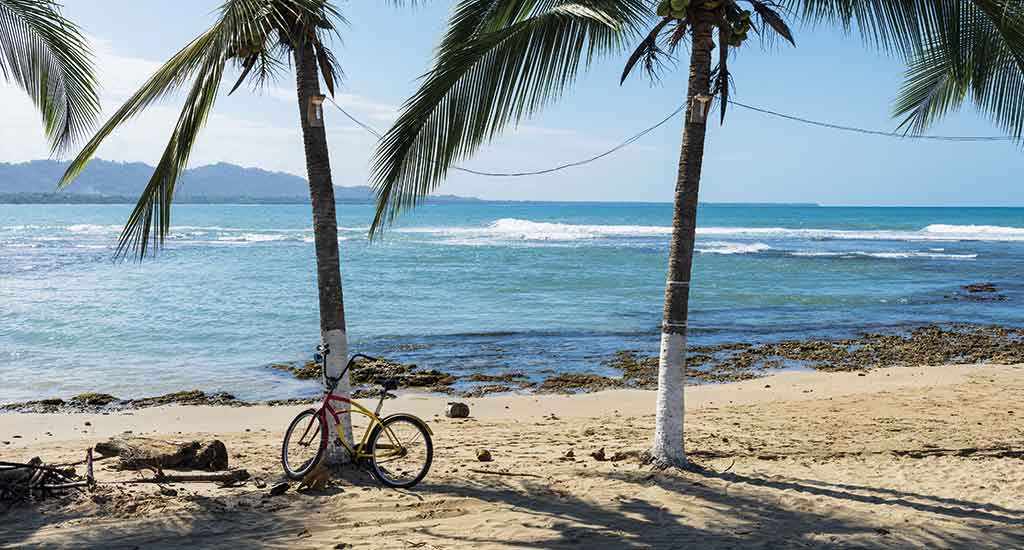
One of the most popular things to do in Puerto Viejo is to hire bicycles and cycle south to the nearby town of Manzanillo.
It’s a 13 km ride each way, but don’t worry, it’s pretty much flat the entire way. It’s also a lovely and new tarmacked road that runs parallel to the coast the whole time.
This means that if you get too hot, or you fancy a break, you can stop for a dip in the sea.
Along the way, you can get some great pictures cycling along, and even spot some monkeys in the jungle on either side of you.
Bicycles are a very common phenomenon in Puerto Viejo
The cars on the road are used to having lots of bicycles on the road, which means they give cyclists lots of space.
There are a number of bike rental places in Puerto Viejo and most accommodations will have bikes for rent too. Expect to pay between $3-12 a day.
#3 Climb on the abandoned shipwreck in Manzanillo
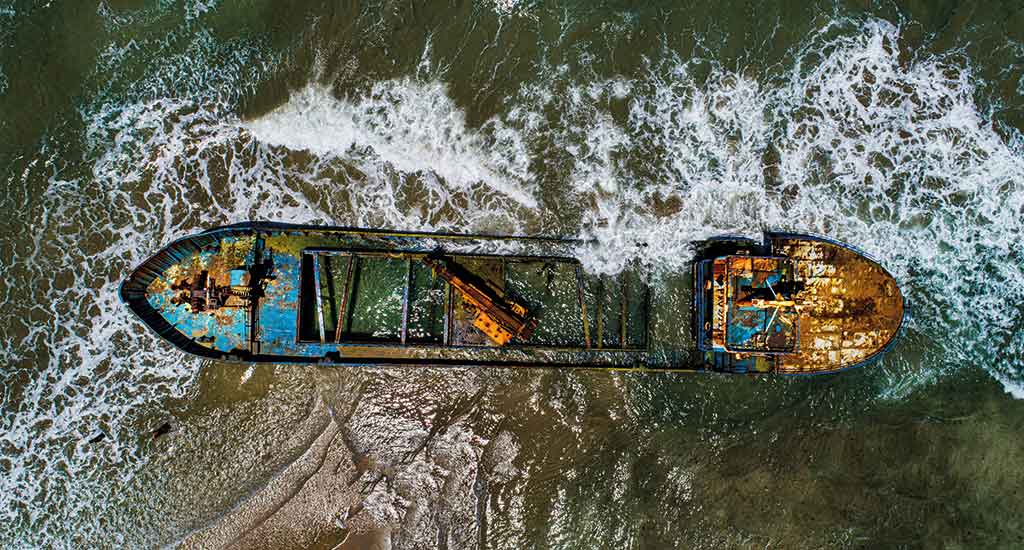
The colourful shipwreck at Playa Grande in Manzanillo has become a popular place to get some great photos. Do some research on Instagram and this will be one of the most common things that comes up for Puerto Viejo.
You can pair a visit to the shipwreck with your day of cycling from Puerto Viejo to Manzanillo.
How did it get there?
The boat from Panama ran aground in Manzanillo beach after water started entering the boat. The captain then decided to run aground so that it wouldn’t sink.
This happened only in 2017, but the boat looks like it’s been there a lot longer!
The boat has now become an adult playground, as you’re able to climb the mast and walk around the captain's cabin. It’s pretty cool, albeit rusty!
New to Puerto Viejo? Check out this compact Puerto Viejo travel guide to find the best areas to stay, restaurants you don't want to miss and many more tips for your visit to Puerto Viejo!
#4 Relax on one of the many beaches in Puerto Viejo
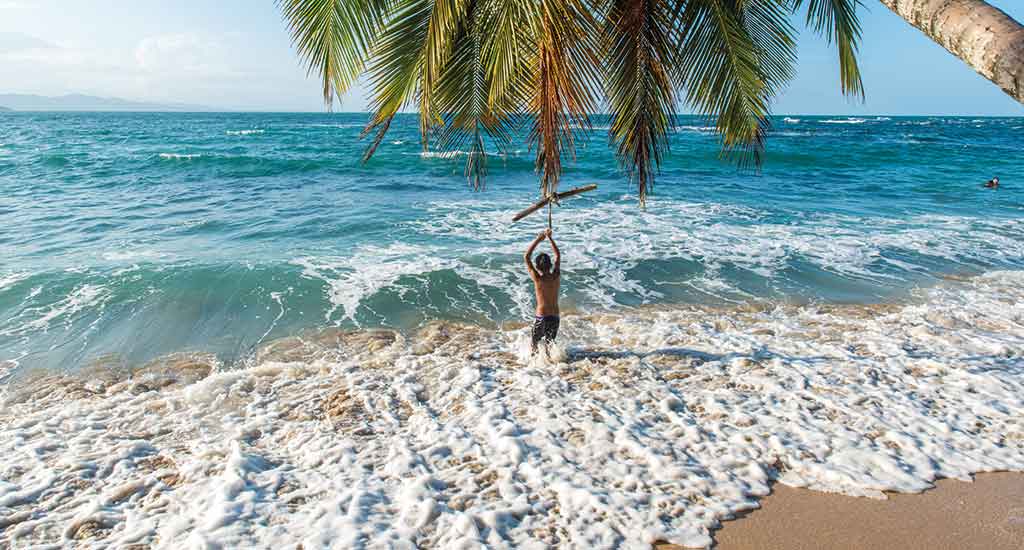
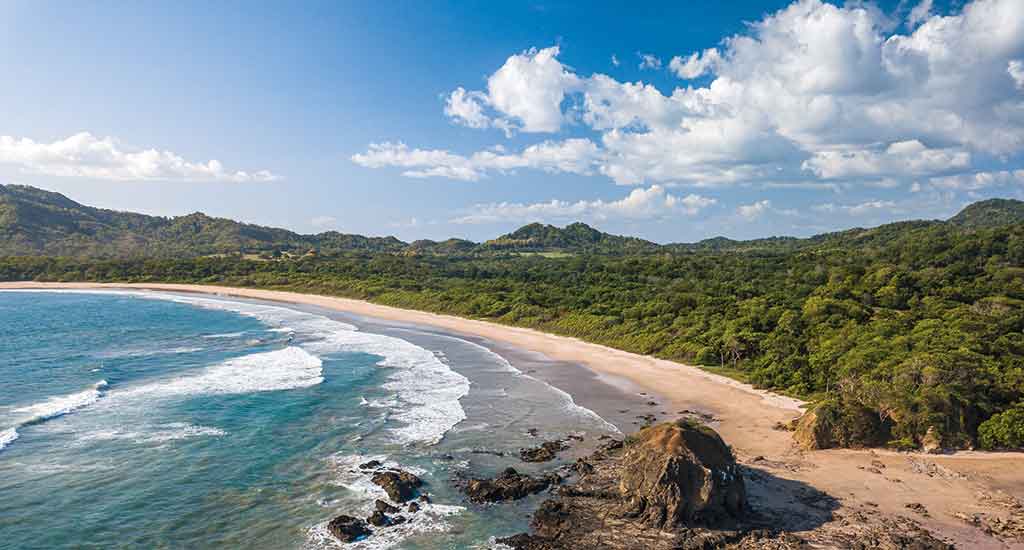
With miles of sandy beaches and the Caribbean sea, Puerto Viejo is predominantly a beach destination.
Nobody’s going to judge you if you want to spend all of your days in Puerto Viejo just lounging on the beaches. Here’s a quick rundown of the beaches in the area:
- Playa Negra - as the name suggests is a glorious black-sand beach that contrasts magnificently with the lush green strip of jungle that borders it. This is the closest beach to town.
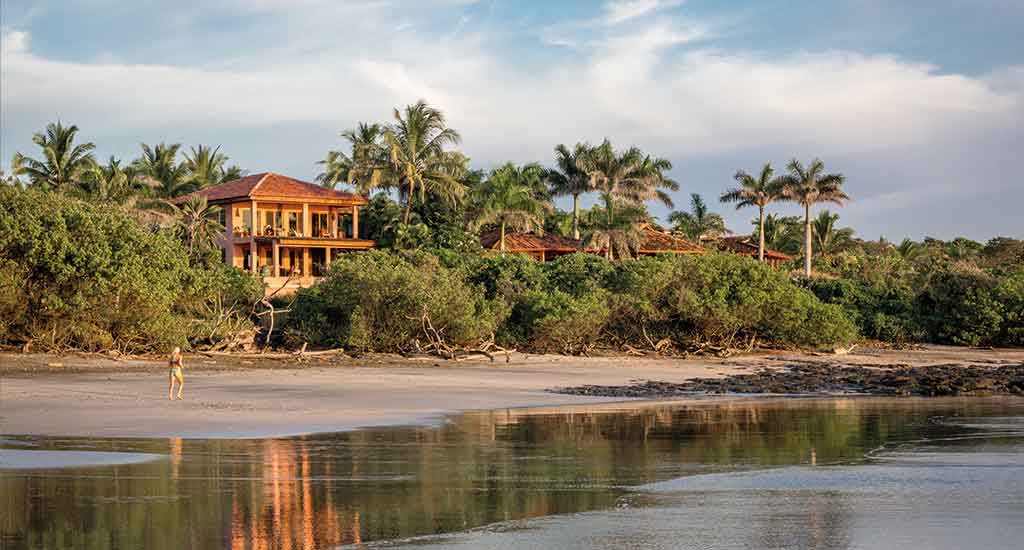
- Playa Cocles - is the most popular beach in Puerto Viejo. The golden-sand beach attracts everyone, including surfers. There’s a number of bars and restaurants close by too.
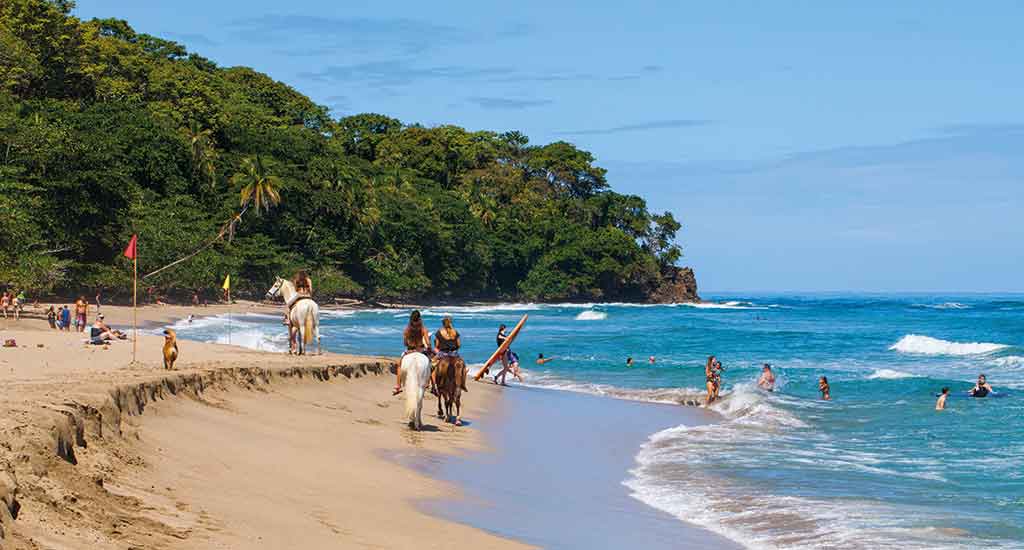
- Playa Chiquita - is 6 km from Puerto Viejo, but is the place to go if you want some tranquillity. The only way to enter this beach is via a jungle path.
- Punta Uva - potentially the prettiest beach near Puerto Viejo. It’s your typical tropical beach, with golden-sand backing onto sweeping palm trees. As it’s further from town, it also never gets too busy.
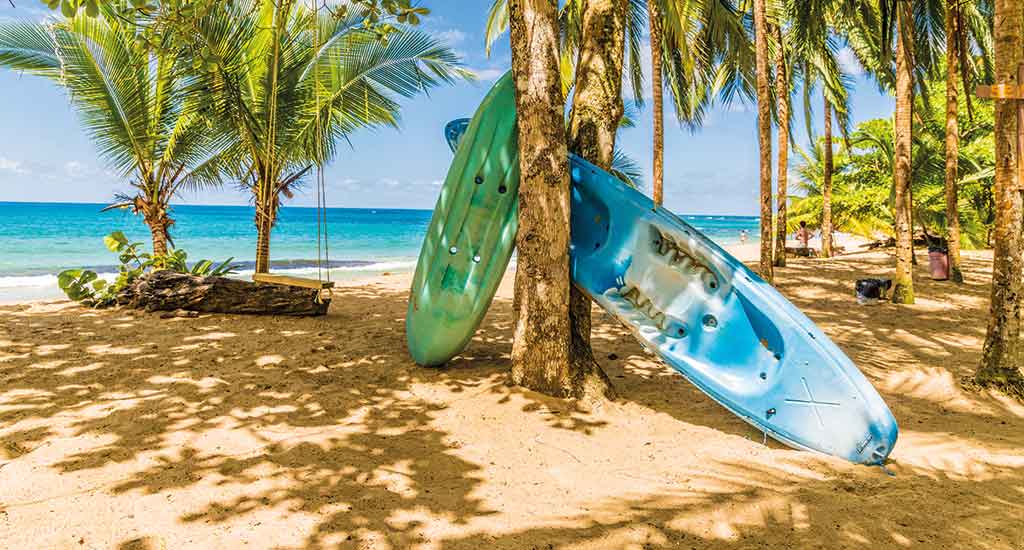
- Playa Grande - can be found in the nearby town of Manzanillo. It’s the longest beach in the area, stretching over 11 km. This is also where you’ll find the famous shipwreck.
#5 Learn about the indigenous Bribri community
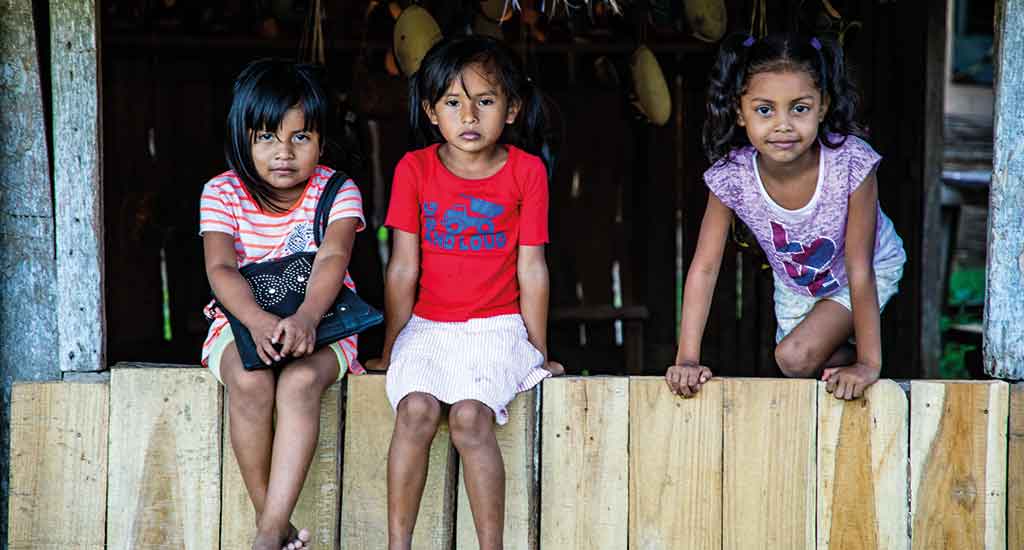
The Bribri are the largest indigenous community in Costa Rica, with around 11,500 Bribri living in Puerto Viejo.
The community speak their own language and even has its own form of sign language. To preserve their culture, they produce their own food, medicine and housing materials.
In recent years the Bribri people have responded to the growing demand for tourism in their indigenous lands by sharing their way of life and love of nature through tours.
How to visit the Bribri community
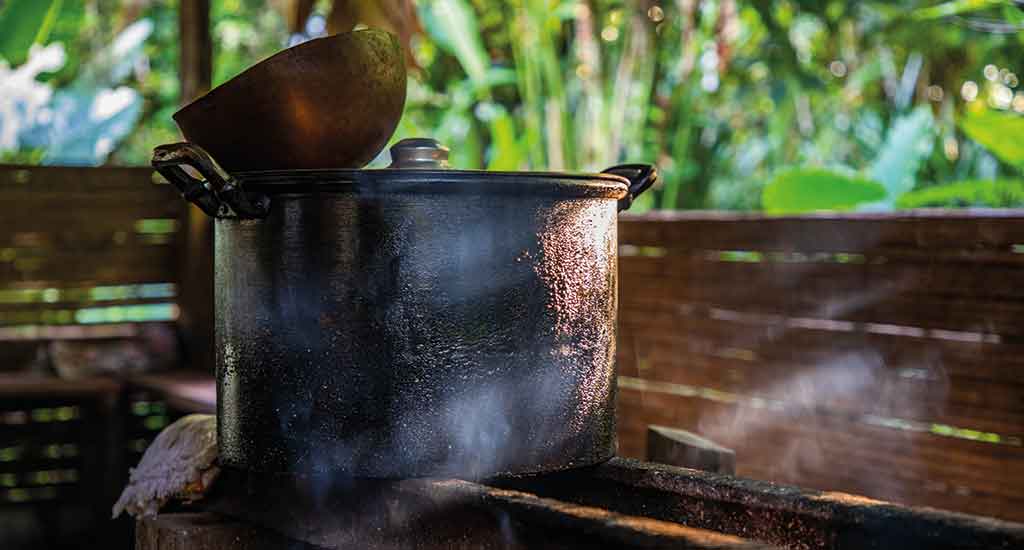
The only way to get access to the Bribri community is by joining a tour. This way you’ll get to speak to them and learn about their culture.
During this Bribri tour for $65, you’ll get to learn about the indigenous community, meet a shaman who will perform a special ceremony, try out chocolate making and visit a waterfall at the end.
It’s really an eye-opening tour that will teach you about how other people live, make their living and live in their community.
#6 Enjoy white-water rafting on Rio Pacuare
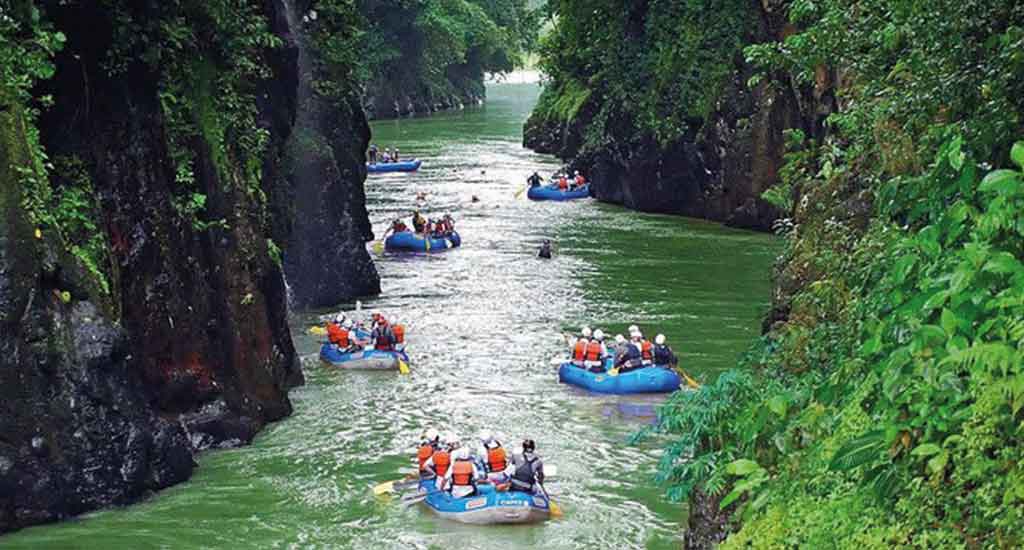
White water rafting down the Rio Pacuare guarantees a day packed with fun and adrenaline.
You’ll get the chance to prove your paddling skills as you navigate more than 50 rapids, ranging from class 2-4 on a 29 km run of river.
In between the thrilling rush, you can admire the scenic river gorge that you’re flowing through. All around you will be waterfalls, unspoiled tropical rainforests and animals! Keep an eye out for sloths, coatis and toucans.
A full-day white water rafting tour lasts for around 6.5 hours and includes all transportation, breakfast, lunch and an experienced guide. The tour costs $103 per person.
Book here: Full-day White Water Rafting Tour for $103
#7 Visit the Jaguar Rescue Centre

The Jaguar Rescue Centre is a temporary or permanent home for ill, injured and orphaned animals.
The work carried out by the staff and volunteers here is pretty incredible. They provide veterinary services and round-the-clock care for the animals within the centre.
Here you’ll be able to find a range of animals - sloths, monkeys, birds, reptiles and wild cats. The name is a bit misleading though as you won’t find any jaguars here.
Public or private tour
To explore the centre, you’ll need to join a tour. You have two options to choose from - a public tour and a private tour.
The public tour costs $22 and lasts for 1.5 hours. The private tour costs $75 and lasts for 2 hours. It’s also after the centre has closed so you’ll get a more intimate and exclusive experience.
The guides are fantastic, retelling the stories of each of the animals and teaching you so much that you didn’t know.
By taking one of these tours, you’re also helping to support the Jaguar Rescue Centre.
#8 Learn how chocolate is made on a chocolate tour
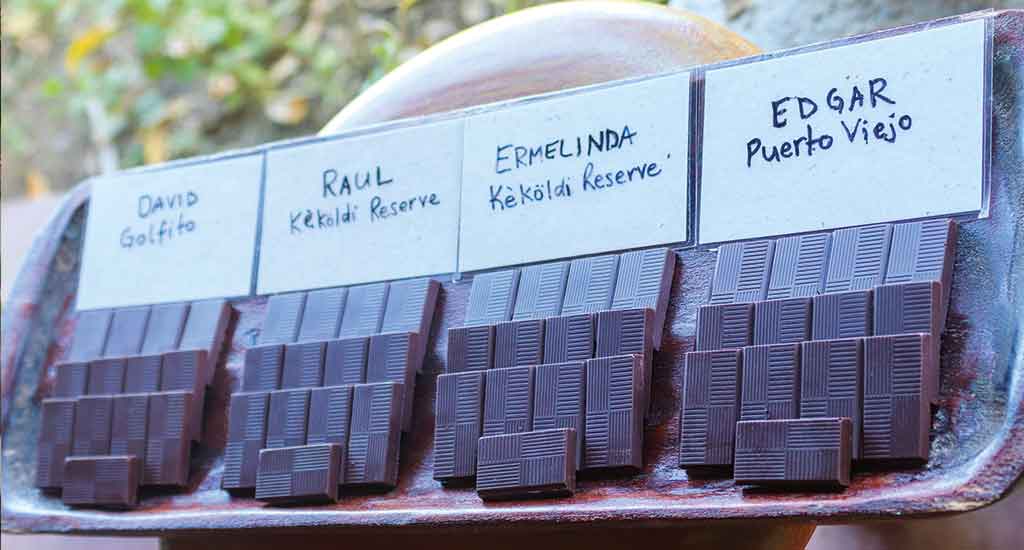
Did you know the world’s average chocolate consumption amounts to almost 1kg per person, per year?
For some among us, that amount might be even higher, but have you really ever thought about where it comes from and how it’s made?
Caribbean Cacao
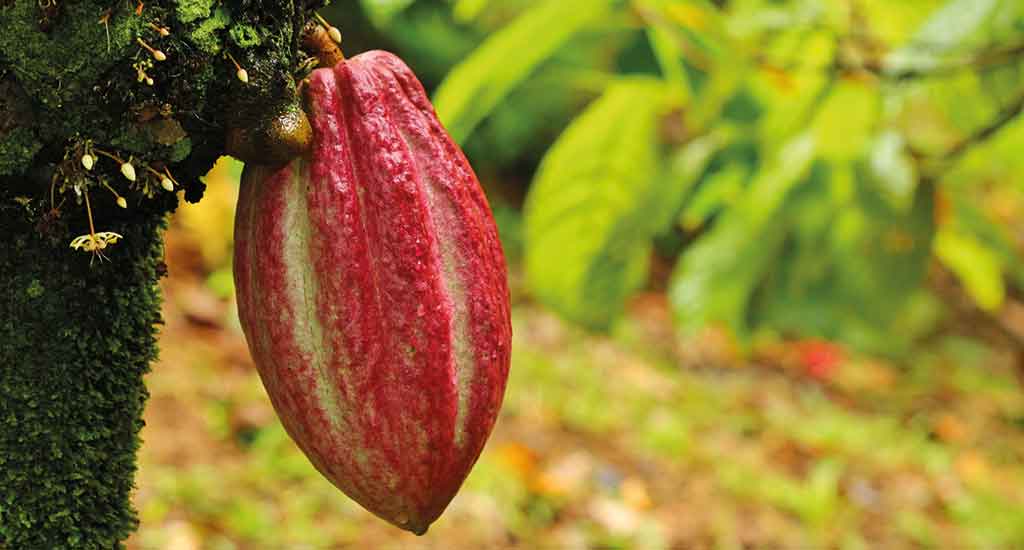
Cacao, which is used to make chocolate, grows very well on the Caribbean coast and is an important crop for the people within the area.
A chocolate tour will take you through the steps of how raw cacao beans are transformed into a delicious bar of chocolate.
This chocolate and sugar organic farm tour costs $70 and takes you on a culinary and culture-infused journey with an expert guide. You’ll visit local farms, whilst getting to sample Caribbean fruits and chocolate and learning how to prepare cane juice.
#9 Take on Puerto Viejo's waves and go surfing
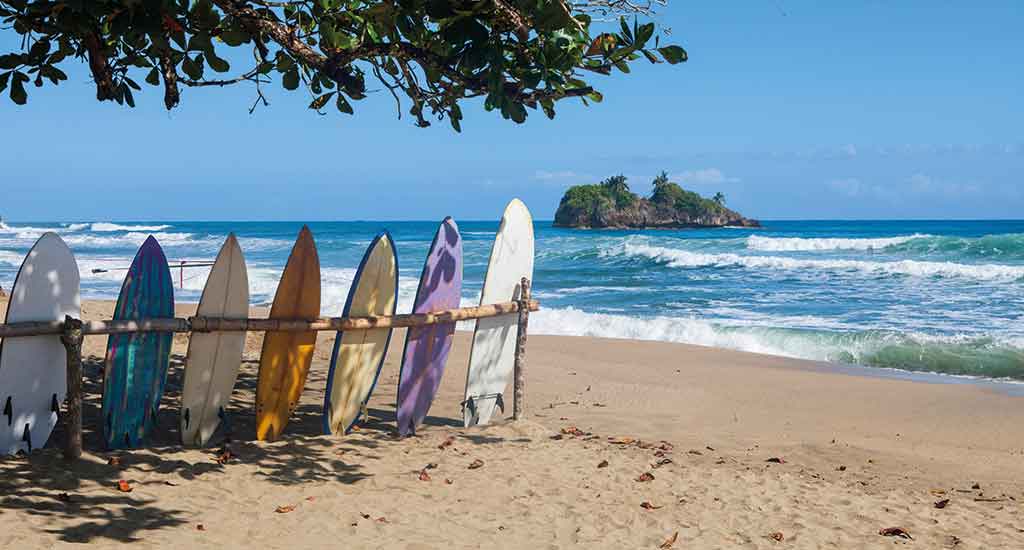
Puerto Viejo is a great place to learn how to surf or just get better at it if you already know how.
Playa Cocles is one of the main surf spots in Puerto Viejo, offering strong waves for intermediate and advanced surfers. Beginners can also try to catch a wave here, but it should be with an instructor by your side.
The current is also pretty strong on this beach, but there are lifeguards on duty.
You can rent a surfboard for around $15 a day.
PRO TIP: If you are keen on surfing, Tamarindo is known as the surfing capital of Costa Rica and is a great place to learn surfing too.
#10 Spot animals at Gandoca-Manzanillo Wildlife Refuge
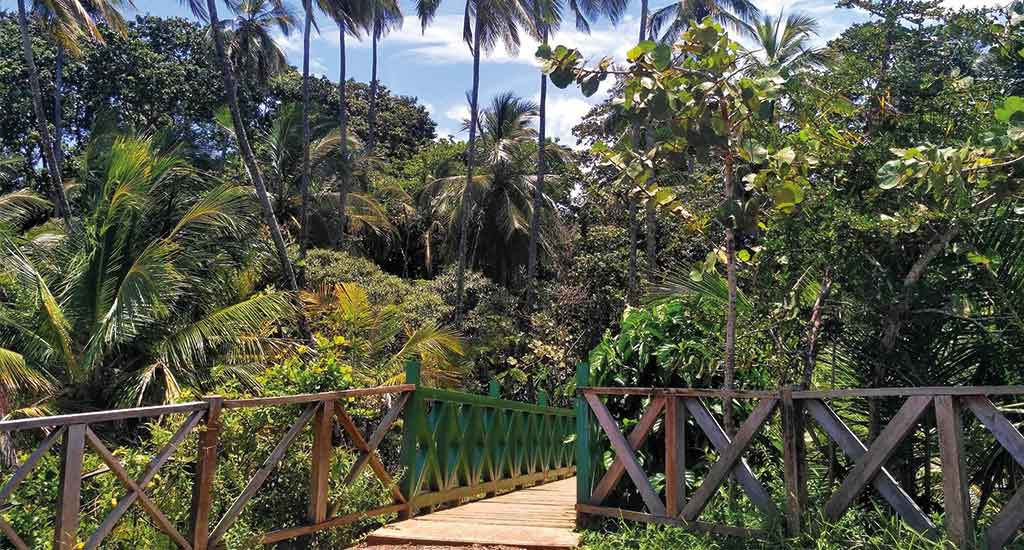
Situated south of Puerto Viejo, just above the Panama border is Gandoca Manzanillo Wildlife Refuge. This area protects some of the region’s most endangered flora and fauna.
Within the refuge, you’ll find several rare habitats such as lowland rainforest, wetland and mangrove swamp. This makes it a very exciting place to go hiking as you can experience a variety of terrains and views.
It’s also a great place to spot wildlife, as it’s the nesting area of turtles, manatees, crocodiles, caimans, tarpons and dolphins. What more can you ask for!
If you’re visiting between March and May then you’re in luck as this is turtle nesting season in Gandoca-Manzanillo.
You can hike through the area by yourself or with a guide.
#11 Enjoy some of the best nightlife in Costa Rica
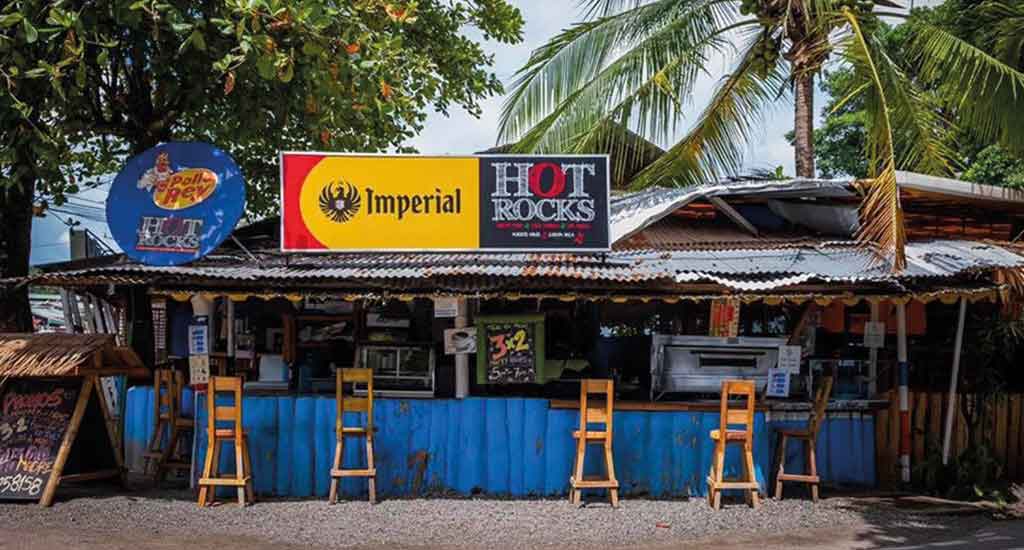
The nightlife in Puerto Viejo is very lively, but at the same time also laid back.
With this we mean - it’s the place to go for some of the best parties in Costa Rica, but it’s also incredibly relaxed. Nobody cares what you wear, there’s no end time and everyone's welcome!
Head to Tasty Waves on a Tuesday to enjoy Taco Tuesday and cheap drinks or enjoy some reggae vibes at Johnny’s Place. Hot Rocks is also a popular spot in town with a 3- hour happy hour every day!
There are currently impromptu beach parties that last until the sun begins to rise again. These don’t have set times or locations, you just need to ask around and hope that someone knows where it’s going to be.
#12 Explore Puerto Viejo's farmers market on a Saturday
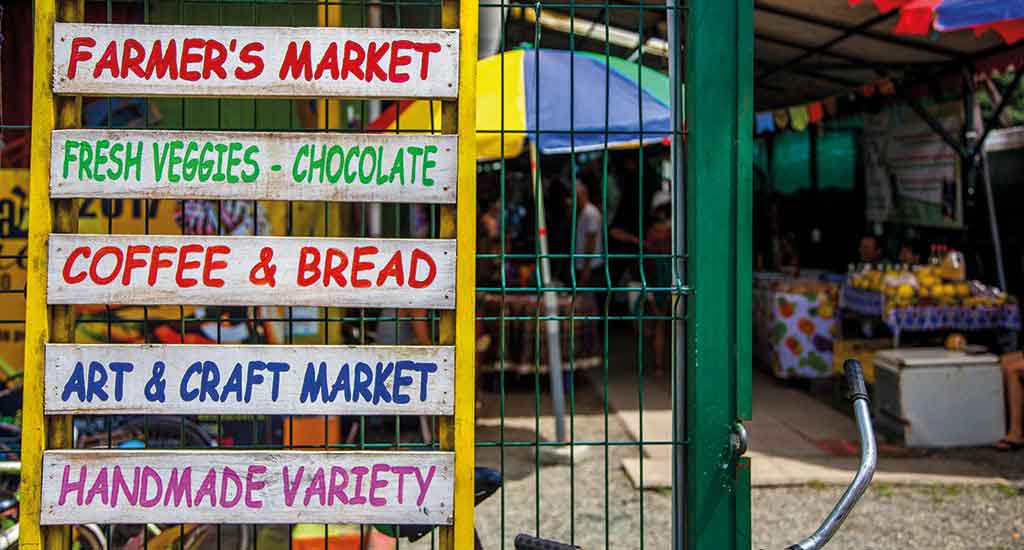
Every Saturday from 07:00 to 12:00, the farmer’s market comes alive. It’s one of the best places to buy fresh food or some souvenirs to take home.
There are a number of stalls selling organic fruit and vegetables, cookies, local bread, coffee and chocolate, as well as local handcrafts, natural soaps and beauty products.
It’s a beautiful way to mingle with the locals and support the community at the same time.
Most popular ways to get to Puerto Viejo
Rounding it up
Now you've picked the best things to do in Puerto Viejo, it's time to start ticking off that bucket list. Not sure how to plan your trip? Our guide is here to help! You'll find out how long to stay in Puerto Viejo, where to eat, how to get around and more. Happy planning!
Stay Connected
Join our Community
We're a small team of passionate travellers sharing what we've learned on the road. Get our best tips, route updates, and travel stories delivered to your inbox.
No spam. Unsubscribe anytime.